proceda connects recognition, qualification, profession, language, visa, and employer into a single system, so every decision sits in context instead of standing alone.
No account, no sign-up. Choose your starting point. proceda shows you which part of the system matters to you first.
Six stations, one order. Pick a station and see what gets decided there and what it depends on.
Everything starts with what you bring: your degree, training content, work experience, evidence. These details determine every later step, so they're captured once, in a structured way, instead of re-entered for every procedure.
Not a topic catalog, but a semantic model: every domain relates to others. Hover a node to see its connections.
The central domain: procedures, jurisdictions, equivalence, decision notices, conditions. Connects qualifications with professions and documents.
Most questions about skilled migration aren't hard. They're framed wrong. The DMMS assigns every question to a domain, makes its dependencies visible, and derives a reliable answer from that.
Jurisdiction follows from your target profession and the federal state where you want to work, not from where you live or where you're from.
Look up the responsible authority →Not a feature list. Five areas where proceda evaluates relationships instead of managing forms.
Compares training content with German reference professions and derives the likely procedural path from it.
Shows which target professions match a profile, including alternatives the same qualification allows.
Derives the required language level from profession and procedure and links it to preparation with Speexx.
Brings demand and profile together based on recognition status and procedural reality, not on keywords.
Keeps a procedure's status traceable: what's done, what's missing, what's next.
We don't list success rates. What's verifiable is what we build on and who we work with.
Language preparation is part of admission, not an add-on. With Speexx, the language track is directly tied to the procedure.
Our models are based on publicly verifiable sources, including Make it in Germany, the Chambers of Commerce (IHK) procedural information, and the responsible recognition authorities.
Every statement can be traced back to its source.Qualifications, professions, and procedures are modeled as relationships, not text pages. That's why a change in the law can be updated in a single place.
proceda is developed by ReFixCon AG as a technology company, not by a placement agency with a stake in the outcome.
Skilled migration only works when everyone involved sees the same status. proceda is the shared layer in between.
Six modules, one status. What you clarify here stays in the app. You don't start from scratch each time.
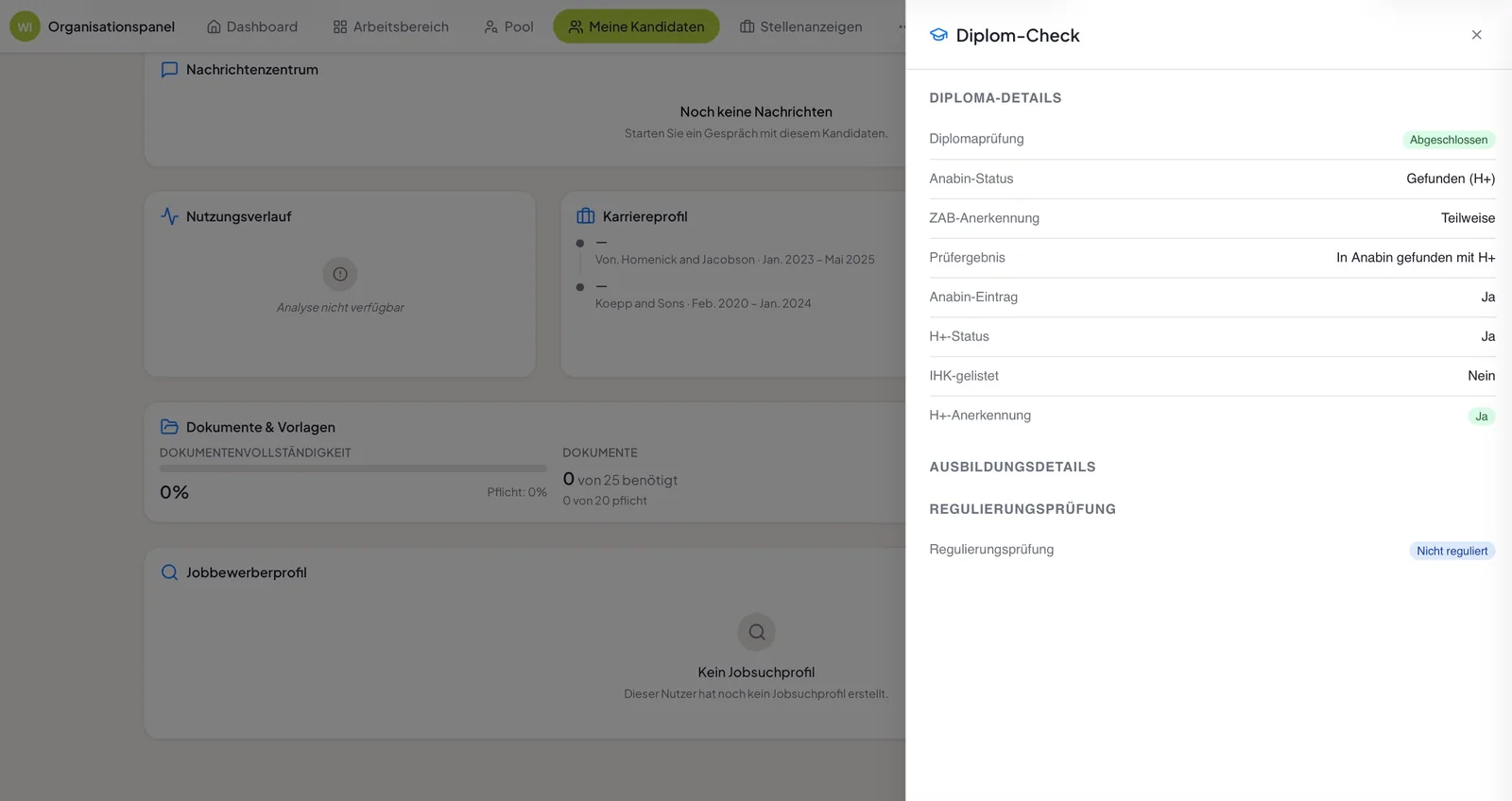
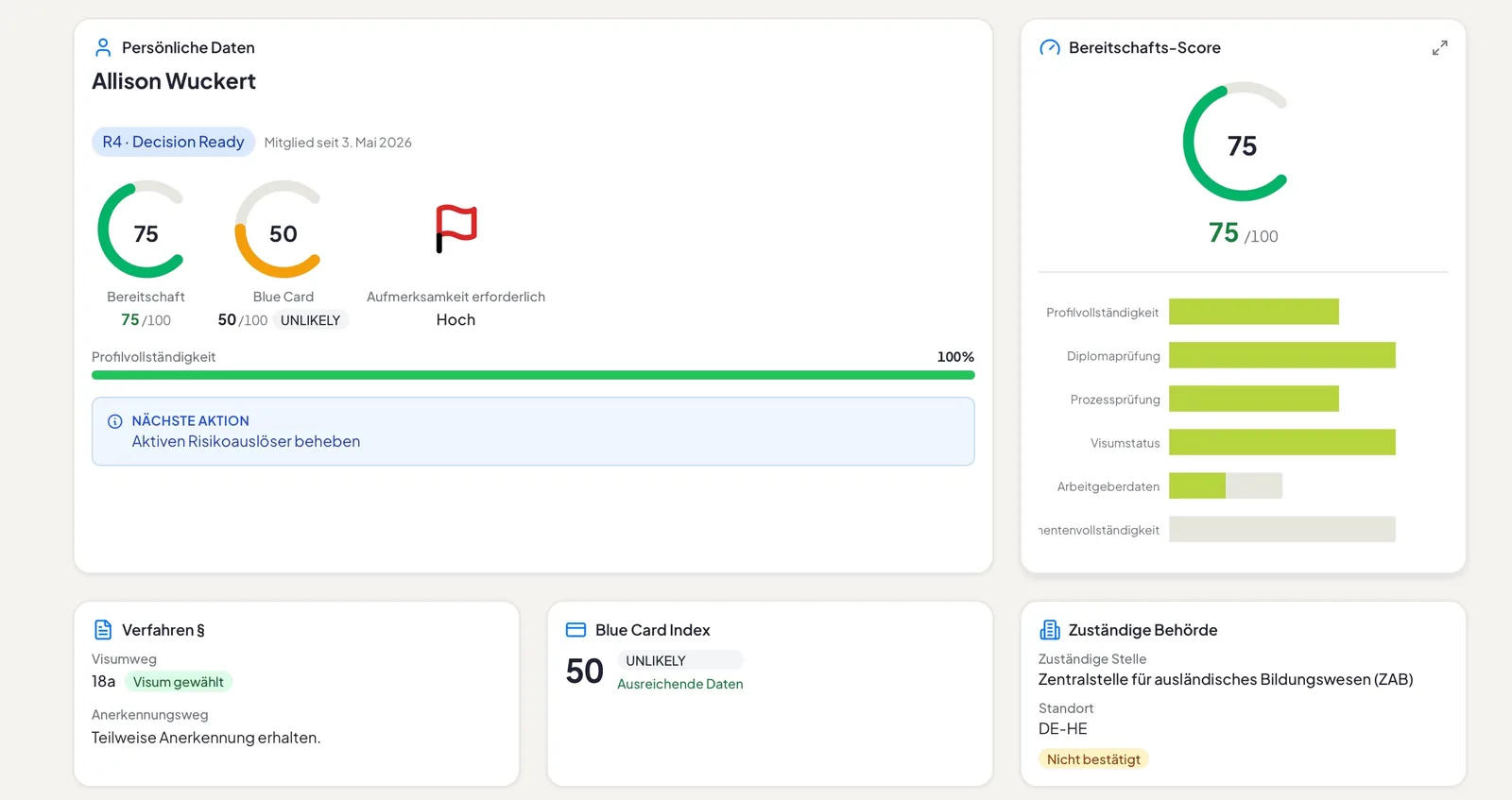
What you clarify in the modules, the app carries forward as one connected procedural status: profile, evidence, application readiness, documents.

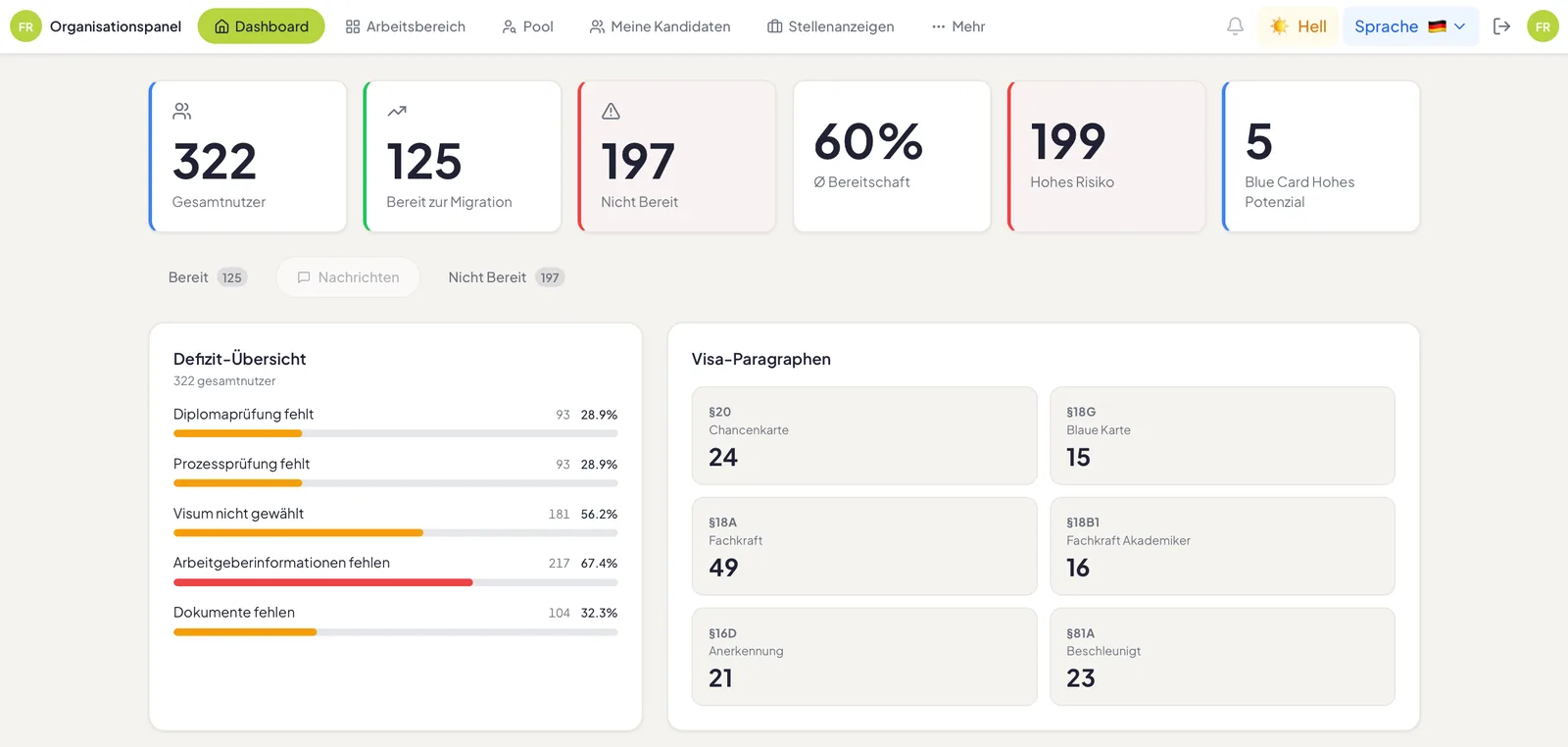
Not a second marketplace, but the organizational view of the same procedures: demand, procedural status, jurisdictions, evidence.
If recognition can be modeled, it can also be transferred. That's the real perspective.
The more procedures are modeled, the more precisely the likely path can be determined in advance.
Authorities, chambers, and systems should be able to connect to the same model instead of rebuilding it.
The logic isn't national. What's modeled for one destination country can be transferred to others.
proceda Explore: The knowledge hub for your path to Germany, topics, journeys and tools in one place.
Open the Explore Hub →
proceda connects recognition, qualification, profession, language, visa, and employer into a single system, so every decision sits in context instead of standing alone.
No account, no sign-up. Choose your starting point. proceda shows you which part of the system matters to you first.
Six stations, one order. Pick a station and see what gets decided there and what it depends on.
Everything starts with what you bring: your degree, training content, work experience, evidence. These details determine every later step, so they're captured once, in a structured way, instead of re-entered for every procedure.
Recognition decides whether and how you're allowed to work in your profession in Germany. Jurisdiction, procedure, and evidence differ by profession and federal state. proceda determines this jurisdiction instead of guessing it.
Language isn't a side condition. It's part of admission. The level you need follows from your profession and procedure, not from a general recommendation.
Your profession determines demand, region, and procedure. Two people with the same degree take different paths if their target profession is regulated differently.
The visa is the result of the previous stations, not their starting point. Which legal basis applies to you follows from your qualification, recognition status, and job offer.
Arriving isn't an endpoint but a transition: onboarding, conditions, further qualification, perspective. This part stays visible in the system too.
Not a topic catalog, but a semantic model: every domain relates to others. Hover a node to see its connections.
The central domain: procedures, jurisdictions, equivalence, decision notices, conditions. Connects qualifications with professions and documents.
Degrees, training content, and work experience, modeled semantically so they become comparable with German reference professions.
Regulated or not, regional demand, entry requirements. The profession decides the path, not just the destination.
General and technical language, recognized certificates, levels by profession. Delivered with our language partner Speexx.
Legal bases, sequencing, evidence. The visa follows from the recognition status, not the other way round.
Translations, certifications, deadlines, formats. The most common cause of delays and the part most easily structured.
Top-up qualification, exam prep, application readiness. Where waiting time turns into progress.
Explore Preparation →What comes after the first job: further qualification, specialist career, long-term perspective in the target profession.
Demand, procedural obligations, integration. Employers aren't an endpoint of the journey, but a participant in the system.
Most questions about skilled migration aren't hard. They're framed wrong. The DMMS assigns every question to a domain, makes its dependencies visible, and derives a reliable answer from that.
Jurisdiction follows from your target profession and the federal state where you want to work, not from where you live or where you're from.
Look up the responsible authority →The required level follows from the profession and the procedure. For regulated professions, technical language counts too, not just general language.
Check language readiness →"Valid" isn't a property of your degree. It's the result of a comparison with a specific reference profession. Only that comparison makes the question answerable.
Recognition of the degree →Whether an apostille, certification, or a simple translation is enough depends on the country of issue and the receiving authority. Both are known in advance.
Prepare documents correctly →This question changes the entire path ahead: for regulated professions, recognition is a precondition for working; for non-regulated ones, it's only an option.
Regulated professions →The legal basis isn't a preference. It's a consequence. It follows from your recognition status and whether a job offer exists.
Compare visa types →There's exactly one decision everything else waits on. Which one that is differs case by case and can be determined from your details.
Clarify the process order →Not a feature list. Five areas where proceda evaluates relationships instead of managing forms.
Compares training content with German reference professions and derives the likely procedural path from it.
Shows which target professions match a profile, including alternatives the same qualification allows.
Derives the required language level from profession and procedure and links it to preparation with Speexx.
Brings demand and profile together based on recognition status and procedural reality, not on keywords.
Keeps a procedure's status traceable: what's done, what's missing, what's next.
We don't list success rates. What's verifiable is what we build on and who we work with.
Language preparation is part of admission, not an add-on. With Speexx, the language track is directly tied to the procedure.
Our models are based on publicly verifiable sources, including Make it in Germany, the Chambers of Commerce (IHK) procedural information, and the responsible recognition authorities.
Every statement can be traced back to its source.Qualifications, professions, and procedures are modeled as relationships, not text pages. That's why a change in the law can be updated in a single place.
proceda is developed by ReFixCon AG as a technology company, not by a placement agency with a stake in the outcome.
Skilled migration only works when everyone involved sees the same status. proceda is the shared layer in between.
Six modules, one status. What you clarify here stays in the app. You don't start from scratch each time.
What you clarify in the modules, the app carries forward as one connected procedural status: profile, evidence, application readiness, documents.
Not a second marketplace, but the organizational view of the same procedures: demand, procedural status, jurisdictions, evidence.
If recognition can be modeled, it can also be transferred. That's the real perspective.
The more procedures are modeled, the more precisely the likely path can be determined in advance.
Authorities, chambers, and systems should be able to connect to the same model instead of rebuilding it.
The logic isn't national. What's modeled for one destination country can be transferred to others.
proceda Explore: The knowledge hub for your path to Germany, topics, journeys and tools in one place.
Open the Explore Hub →